
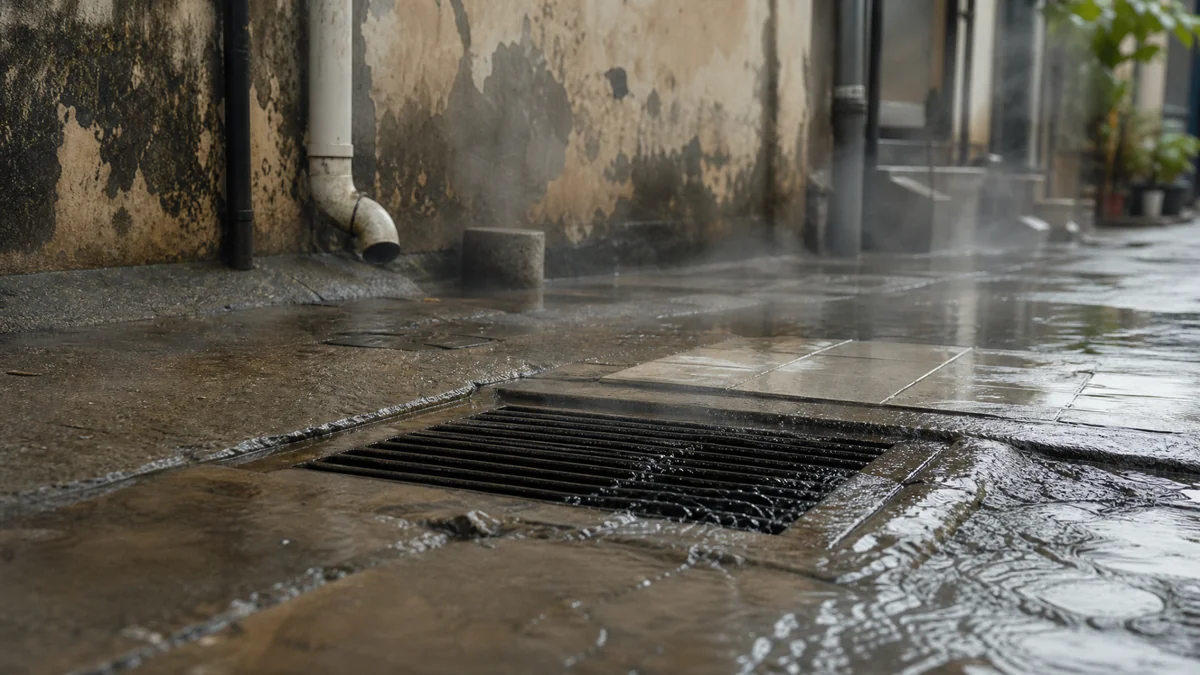
It is a familiar Malaysian experience: an afternoon downpour ends, the air clears — and then the smell arrives. A sulphurous, sewage-like odour rising from the floor traps, the bathroom, or the back lane drain. By evening it fades. Next storm, it returns.
Most people treat this as a fact of life. It is not. The after-rain smell is a symptom with specific causes, some of which are warnings worth acting on. Here is what is actually happening, how to tell the harmless cause from the serious one, and when to bring in a contractor.
What Rain Does to Your Drainage System
Heavy rain loads the drainage network — both the storm drains outside and, in many older Malaysian properties, the building's own system — with a sudden surge of water. That surge does three things:
It compresses and displaces sewer gases. Air inside the pipes has to go somewhere as water fills them. The path of least resistance is up — through floor traps, gully traps and vent points into your premises. If the water seals that normally block those gases are weak or dry, the smell comes straight through.
It stirs up settled material. Sludge, grease and organic matter sitting quietly at the bottom of pipes and traps gets churned by turbulent flow. Disturbed sludge releases hydrogen sulphide — the classic rotten-egg smell.
It raises the water table and backpressures old pipes. In low-lying areas, saturated ground pushes against ageing pipework. Water infiltrates through cracks and joints, partially filling lines that normally run near-empty, and pushing gas ahead of it.
Cause 1 — Dry or Failed Floor Traps (the harmless one)
Every floor trap and gully holds a small plug of water — the water seal — that blocks sewer gas. In rooms where the floor trap rarely sees water (a store room, a guest bathroom, an unused wet kitchen), that seal evaporates in Malaysian heat within weeks. Rain pressurises the system, and gas walks straight through the dry trap.
The test: pour a jug of water into every floor trap in the premises. If the smell stops recurring after rain, that was the whole problem. Make it a monthly habit for unused rooms. Total cost: zero.
Cause 2 — Accumulated Grease and Sludge (the creeping one)
If the smell persists with wet traps, the source is likely material inside the lines. In F&B premises and older homes, years of grease and organic sludge coat the pipe walls. Every rainstorm stirs it; every stir releases odour. This one does not fix itself — the accumulation only grows, and it is the same accumulation that eventually causes the blockage, as covered in our guide on emergency sewer blockages in restaurants.
The fix is mechanical: high-pressure water jetting strips the accumulated material off the pipe walls and restores clean flow. For commercial kitchens, an overdue grease trap service is usually part of the same problem.
Cause 3 — Cracked or Displaced Pipes (the serious one)
If the smell after rain is strong, localised to one area, and getting worse over months — especially in a building over 20 years old — the likely cause is structural: a cracked pipe or displaced joint that lets rain-saturated ground exchange air and water with your drainage line. Warning signs that push this cause up the list: damp patches or subsidence near the smell, gurgling from fixtures during rain, or pest activity around one drain point.
Structural defects cannot be diagnosed by smell alone. A CCTV pipe inspection puts a camera in the line and finds the exact defect and location — which turns "there's a smell somewhere" into a targeted, quotable repair instead of speculative digging.
Cause 4 — The Public Drain, Not Yours
Sometimes the source is the municipal storm drain or a neighbouring premises' discharge, and your property is just downwind. Test: does the smell persist indoors with all traps wet and windows closed? If it is genuinely outdoor-only and originates from the public longkang, the responsible party is the local authority (DBKL, MBPJ, MPKj and others depending on your area) — report it through their complaint channels. What you can control on your side is keeping your own connections sealed and your traps wet, so the outside smell stays outside.
A Simple Decision Path
Wet every floor trap → smell gone? Done.
Smell persists, premises has kitchen/F&B history → book jetting and grease trap service.
Smell persists, building is old, symptoms worsening or localised → CCTV inspection to find the structural cause.
Smell is genuinely external → report to your local authority; keep your own seals maintained.
The one mistake to avoid: pouring chemical drain cleaner down the traps every time it rains. It masks the odour for a day, damages older pipes over time, and treats nothing.
Persistent Drain Odours in KL & Selangor
Akelus Eco Solutions diagnoses and fixes persistent drainage odours for homes, restaurants and commercial premises across Kuala Lumpur, Selangor and Seremban — from water jetting and grease trap service to CCTV inspection for structural causes. We are a CIDB-registered and SPAN PERMIT HOLDER sewerage contractor with over 10 years of experience in the Klang Valley.
Call or WhatsApp: 017-244 2493. Available 24 hours, 7 days a week. Email: info@akeluseco.com. Website: www.akeluseco.com.
Need help with sewerage, drainage or grease trap services?
Akelus Eco Solutions serves Kuala Lumpur and Selangor 24/7.
Get a Quote